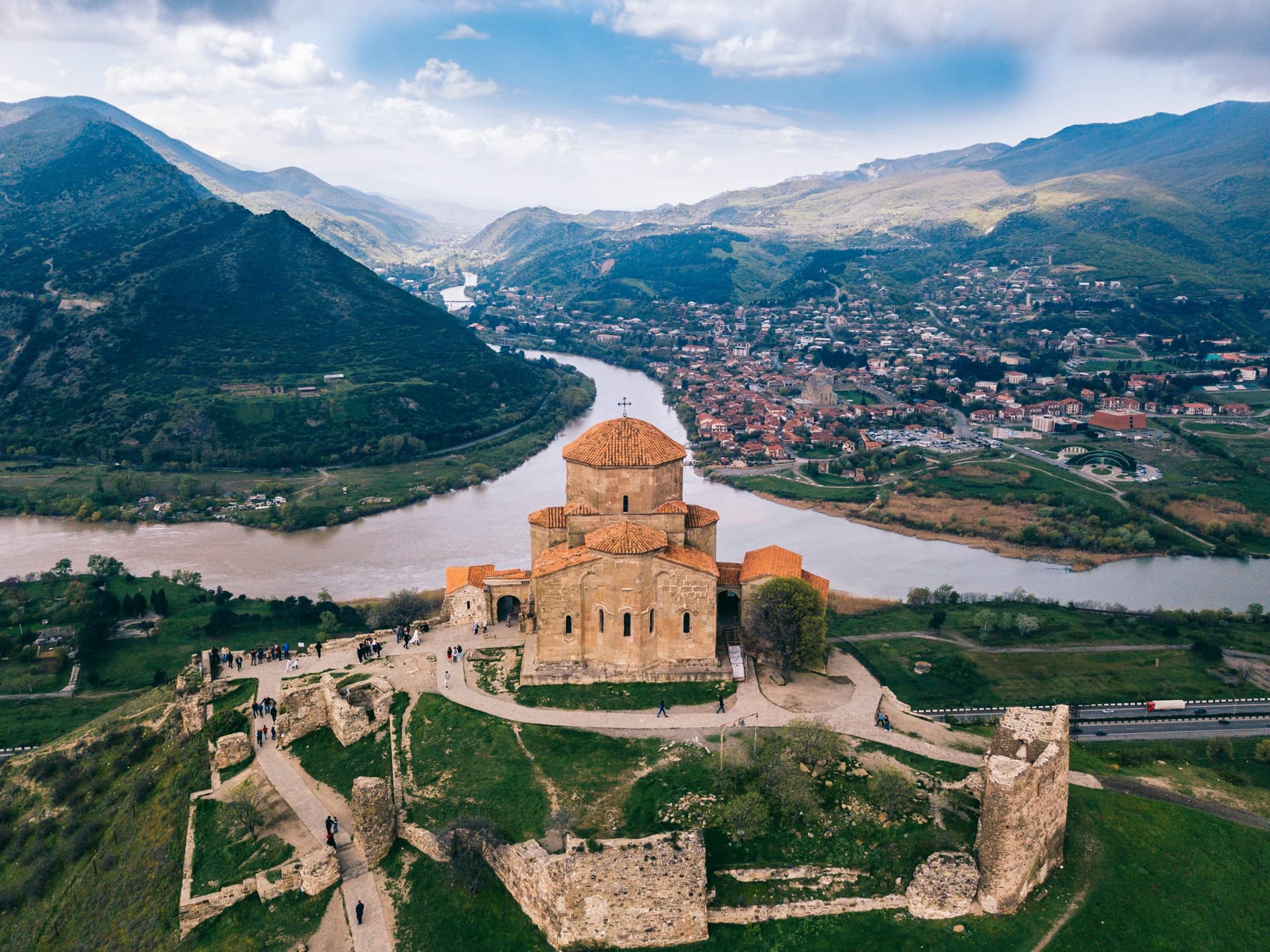
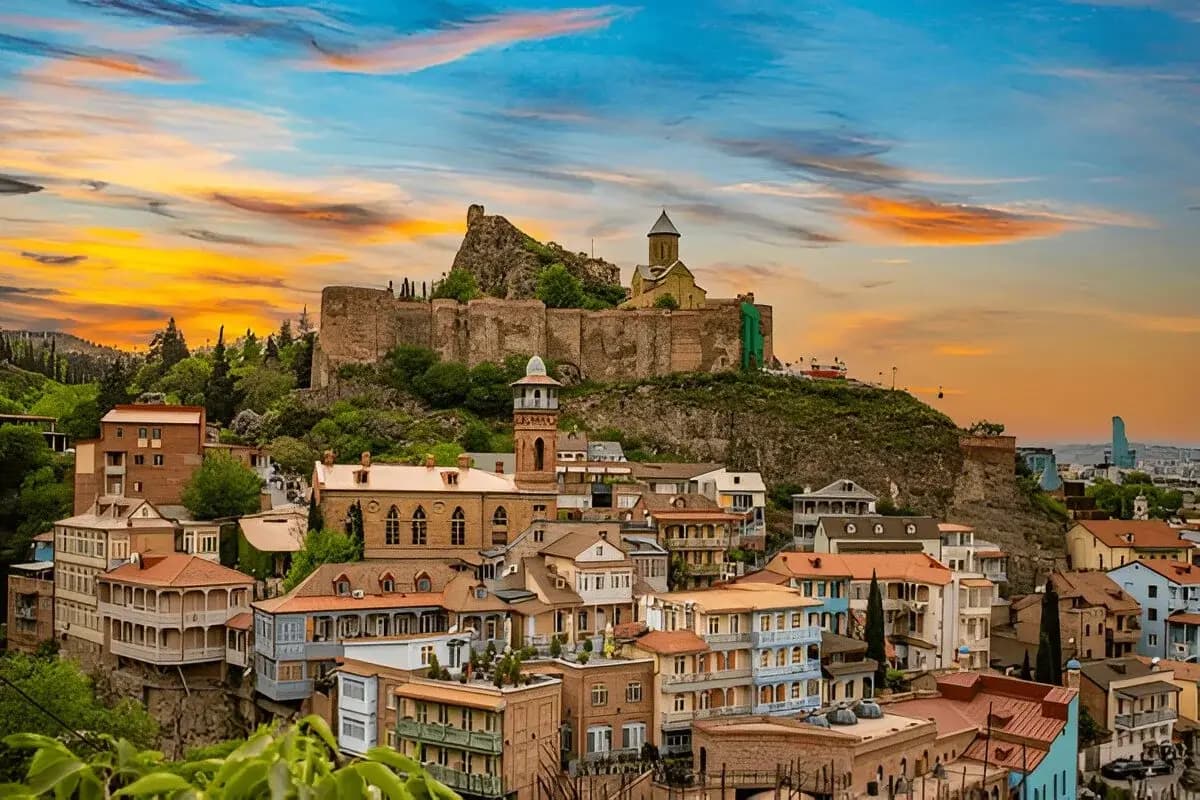
About 11 km outside the city, Gelati is the reason many people have heard of Kutaisi at all. Built in the 12th century by King David the Builder, it was the intellectual and spiritual center of medieval Georgia — think of it less as a church and more as a medieval university campus that happened to have extraordinary mosaics.
The golden apse mosaic of the Virgin and Child inside the main cathedral is genuinely moving. Go in the morning when light comes in from the east and the place is quiet. The king himself is buried under the entrance gate — legend says he chose that spot so that every visitor would walk over him.
Entry is free. Modest dress required; scarves are available at the door.
Bagrati Cathedral
Back in the city, Bagrati Cathedral sits on a hill above the Rioni River and has been partially restored after centuries of damage. Opinions on the restoration are divided — some locals think it went too far, others are glad the roof is back. Either way, the view over Kutaisi's low rooftops and the river bend is worth the short climb.
The Green Bazaar
If you only have an hour in the city center, spend it at the Green Bazaar (locals just call it bazari). It's chaotic and colorful in the best way. You'll find churchkhela (walnut-and-grape-must candy) for around 3–5 GEL a string, Imeretian cheese (imeruli) piled in big white rounds, fresh herbs sold in bundles the size of a small child, and older women who will absolutely try to feed you something before you've had a chance to say no.
Try the lobiani — flatbread stuffed with spiced kidney beans — from one of the bakery stalls. It costs about 2 GEL and is one of the best things you'll eat in Georgia.
Prometheus Cave
About 20 km from the city, Prometheus Cave is one of the largest cave systems in the Caucasus. The name is theatrical (Greek myth places Prometheus's punishment somewhere in these mountains), but the cave itself is legitimately impressive: cathedral-sized chambers, stalactites that have been forming for millions of years, and an optional boat ride on an underground river.
Tours run every hour, last about 1.5 hours, and cost 23 GEL for the cave plus 10 GEL extra for the boat. It's a well-organized site, not a rough adventure — good for all ages.
Where to Eat
Kutaisi's food scene is quieter than Tbilisi's but honest. Palaty near the central park does solid Imeretian food — order the ojakhuri (pan-fried pork with potatoes) and a carafe of local white. For something lighter, the cafes along the Rioni embankment are good for coffee and achma (a layered cheese-and-dough dish that sounds simple and tastes extraordinary).
Dinner for two with wine rarely exceeds 60–70 GEL at a mid-range place.
Getting There
Kutaisi has its own international airport (KUT), served by Wizz Air and a handful of other low-cost carriers from European cities. It's often cheaper to fly into Kutaisi than Tbilisi. From the airport to the city center, a taxi costs around 30–35 GEL and takes 20 minutes. Marshrutkas (shared minibuses) also connect Kutaisi to Tbilisi in about 3 hours for 10 GEL.
Share:
Travel Tips
•Gelati and Bagrati are best visited early morning — tour groups arrive by 10 am and the atmosphere shifts.
•Prometheus Cave stays 14°C year-round — bring a light jacket even in summer.
•Kutaisi airport is 20 km from the city; agree on the taxi fare before getting in (≈30–35 GEL).
•The Green Bazaar is liveliest on weekday mornings; by early afternoon many stalls begin to close.
•Imereti wine is less tannic than Kakheti amber wine — a good starting point if you're new to Georgian wine.